
Simplified or Traditional Chinese — which does your practice need?
Simplified and Traditional Chinese aren't interchangeable on a website or an intake form. How a San Gabriel Valley practice works out which one its patients actually read.
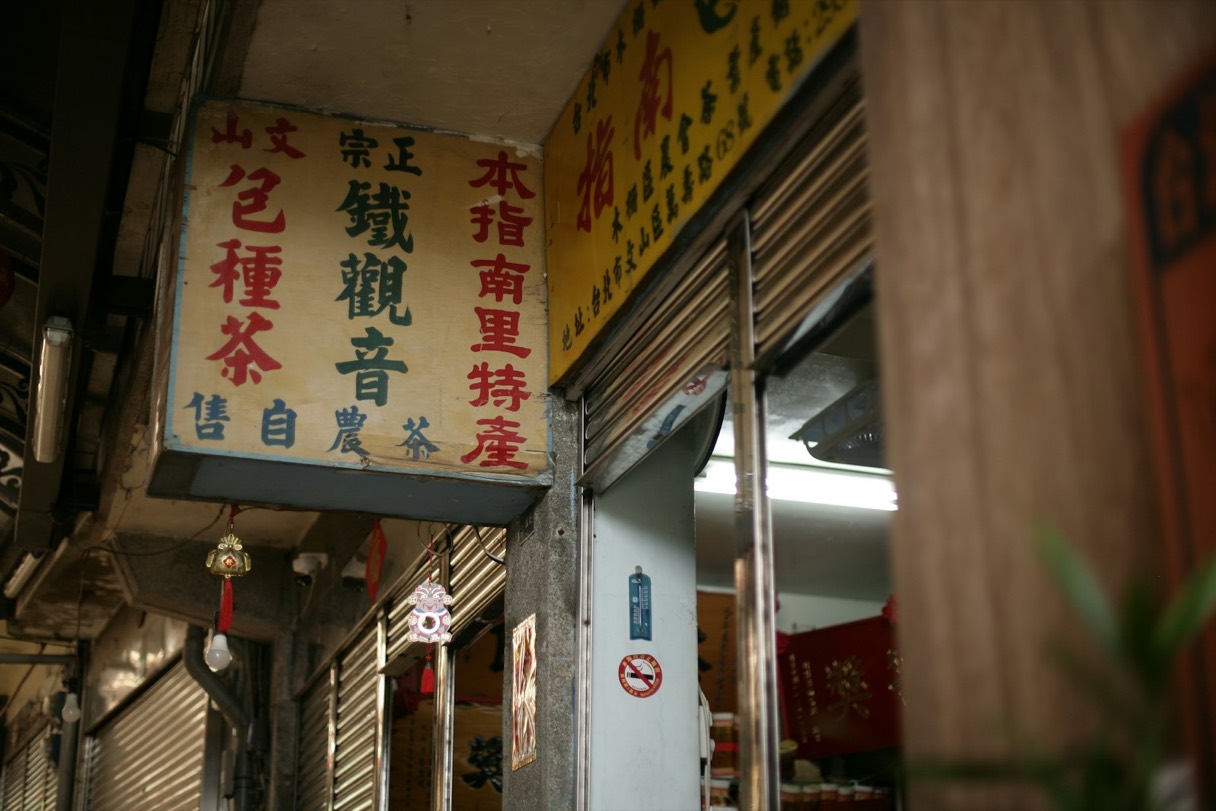
TL;DR — Simplified Chinese (简体) is what mainland China uses. Traditional Chinese (繁體) is what Taiwan, Hong Kong, Macau, and a great many older Chinese-American communities use. If you do not know which one your patients read, ask them, rather than guessing on the basis that they are “Chinese.” Getting it wrong, or mixing the two on a single page, reads as careless to a native reader rather than as neutral.
If a patient in Monterey Park or Alhambra is going to read your website — or, more consequentially, your intake form — in Chinese, you need to know which Chinese. Simplified and Traditional are not two fonts or two styles of one language: they are two distinct writing systems for the same spoken language, and a page that mixes them appears to have been assembled by somebody who did not care sufficiently to check. That is the precise opposite of the impression you want to leave with somebody deciding whether to trust you with their care.
The actual difference, and why it matters more than it sounds
Simplified Chinese was introduced by the mainland Chinese government during the 1950s in order to raise literacy, and many common characters were redrawn with fewer strokes. Traditional Chinese retained the older character forms, and because Taiwan, Hong Kong, and macau never adopted the simplification, they continue to use Traditional today. Singapore and Malaysia predominantly use Simplified.
A reader fluent in one can frequently puzzle through the other, much as an English speaker can ordinarily work out British against American spelling. But “can puzzle through” does not constitute the bar for a consent form. A native reader notices the mismatch instantly, and the effect is not neutral: it reads as evidence that this practice does not know whom it is addressing. Where the document in question explains a procedure or a medication, being approximately legible is not the standard anybody should be aiming at.
Mixing the two within a single page — one paragraph in Simplified and the next in Traditional, because two different translators or two separate machine-translation passes touched the copy — is worse than choosing the wrong one consistently, because it looks as though nobody proofread it at all.
How to work out which one your patients actually use
Do not settle this by consulting a map and guessing. Ask your actual patients, or examine where they are already arriving from — your own records describe who walks in, which a city average cannot.
Signals that point toward Traditional Chinese:
- Older, established immigrant communities. Monterey Park and portions of Alhambra built their Chinese-American population substantially through Taiwanese and Hong Kong immigration beginning in the 1970s and 1980s, well before mainland immigration expanded.
- Patients who mention Taiwan, Hong Kong, or Macau, or whose names romanize in Wade-Giles or Hong Kong-style spelling rather than in Hanyu Pinyin.
- Existing signage or forms at your office already rendered in Traditional, which is strong evidence that your current patients read it, and switching would confuse people rather than assist them.
Signals that point toward Simplified Chinese:
- Newer immigrant populations from mainland China, which have grown across the San Gabriel Valley. Arcadia and San Marino in particular saw considerable mainland Chinese immigration and investment throughout the 2000s and 2010s.
- Patients whose names romanize in Hanyu Pinyin, which is the mainland’s standard system.
- A patient roster skewing younger and more recently arrived.
Neither set constitutes a hard rule, and the only way to know with any certainty is to ask. If you have existing Chinese-speaking patients or staff, ask them directly which one they read comfortably — and ask several people rather than one, since a single person’s background is not your whole roster. If you are building this before you have patients available to ask, examine the signage and materials of the nearest comparable practices in the neighborhood you intend to serve.
When the answer is “both”
A great many San Gabriel Valley practices genuinely serve both communities: a dentist in Alhambra, an optometrist covering Monterey Park through Arcadia, a family physician carrying patients across the entire region. In that circumstance, build both, as fully separate translated pages, rather than one page carrying a toggle that substitutes a handful of words.
Do not attempt to split the difference through some hybrid “mostly Traditional but simplified where it is easier” approach. No compromise writing system exists — a reader either recognizes the characters or does not — and a page wobbling between the two simply appears unfinished. Two clean, entirely separate versions beat a single confused one.
One further point deserves stating plainly: neither Simplified nor Traditional does you any good whatsoever if the words themselves are not genuine, natural Chinese, because the register and word choices Taiwan employs for a clinical term are frequently not the words mainland China employs, entirely apart from character sets. A literal translation, or one produced by somebody fluent in the other regional variety, reads as slightly off in the same manner that a British “solicitor” sounds peculiar in Los Angeles advertising copy. If you are paying for a translation, ensure that whoever performs it is translating into the specific regional Chinese your patients actually read, and not merely into the character set.
If you run a practice
Pasadena Works helps independent medical, dental, and eye care practices in the San Gabriel Valley get more patients and run a calmer front office. We are paid by the practice and nobody else, so we will tell you when something is not worth what it costs.